February Recommendations

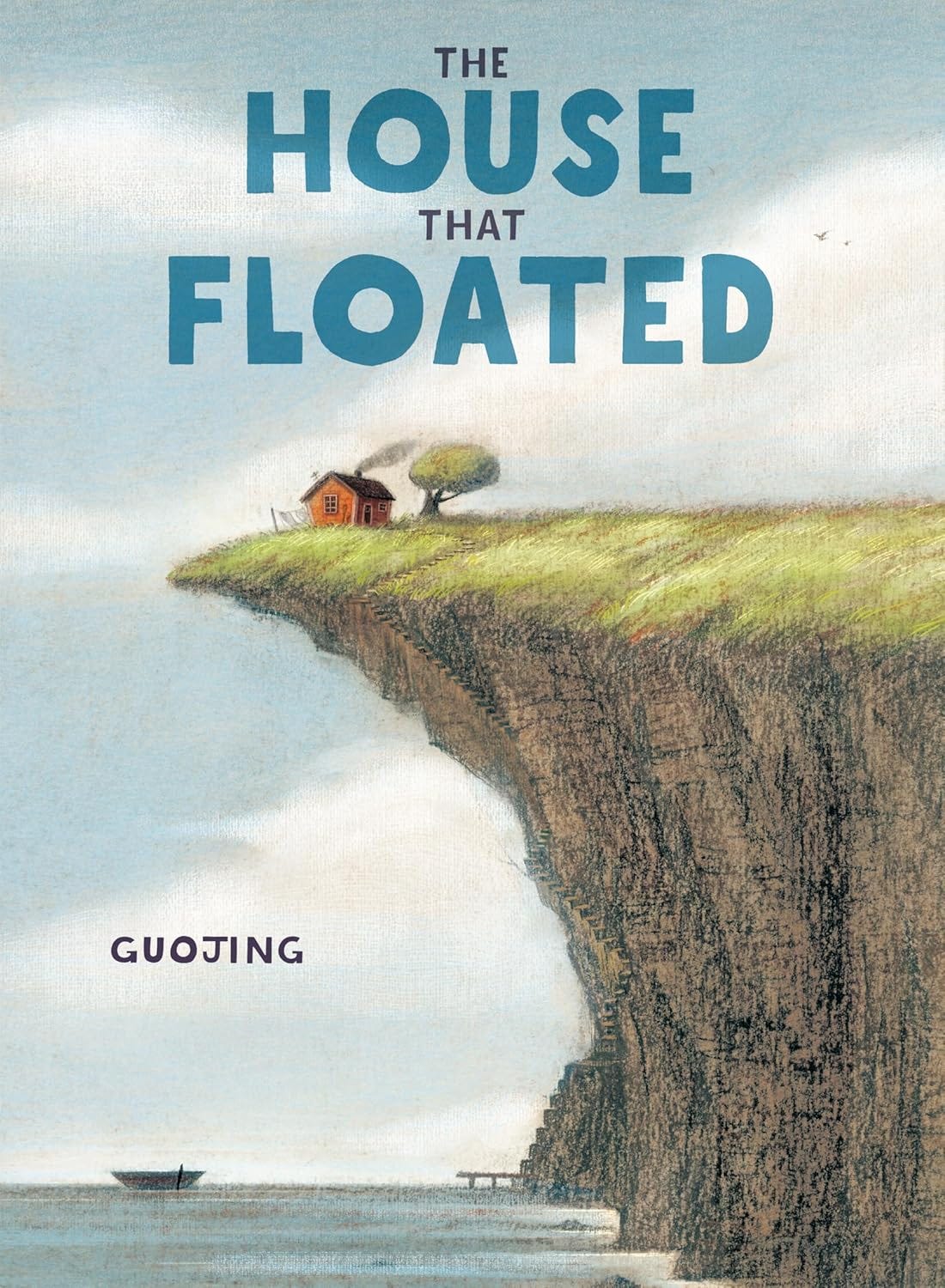
THE HOUSE THAT FLOATED, by Guojing, is a wordless graphic novel about a family who live in a small house on a cliff, overlooking the sea. They swim, they play, they fish. And there are dolphins! They are cozy and happy until a terrible storm causes the water to rise, higher and higher, and they have to leave. The father makes a raft for the house and the family launches their small boat into the unknown. Then… there’s land, and a lighthouse, and a pod of dolphins leading the way! There’s help here, too, and soon the house is cozy and the family is happy again. The story is simple enough, but the colored chalk and Photoshop art conveys depth and atmosphere, and the story feels rich with its message of love and hope in times of change.
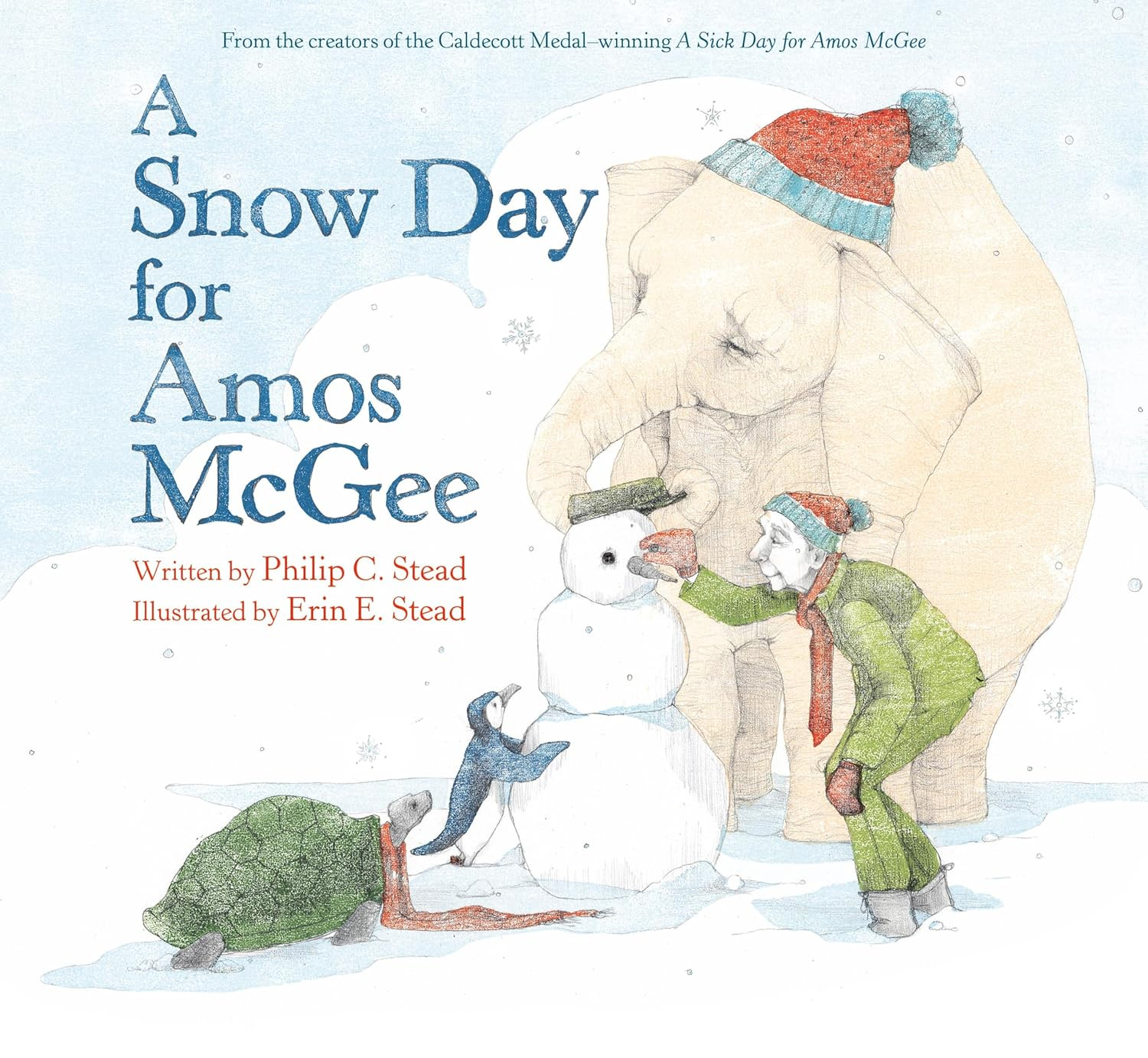
Readers who are familiar with the previous Amos McGee books should welcome the new outing described in A SNOW DAY FOR AMOS McGEE, written by Philip C. Stead and illustrated by Erin E. Stead. Here, we learn that Amos, who loves snow, listens to his radio every morning in hopes of hearing “good news.” When a big snow is finally forecast, Amos dresses warmly and takes the bus to find his friends at the zoo. He distributes knitted winter wear (a pom-pom hat to the elephant, socks to the penguin, even a colorful sweater to the owl), and they all wait, but by the end of the day there’s still no snow. Until morning, that is. The animals join Angus at his home, where they spend a delightful day outside, finishing up with hot chocolate and extra marshmallows as evening falls. The gentle inhabitants of this world are a joy to spend time with, the story is full of charm, and the woodblock and pencil illustrations (which include details like the tortoise wearing an afghan while on skis) are a delight.
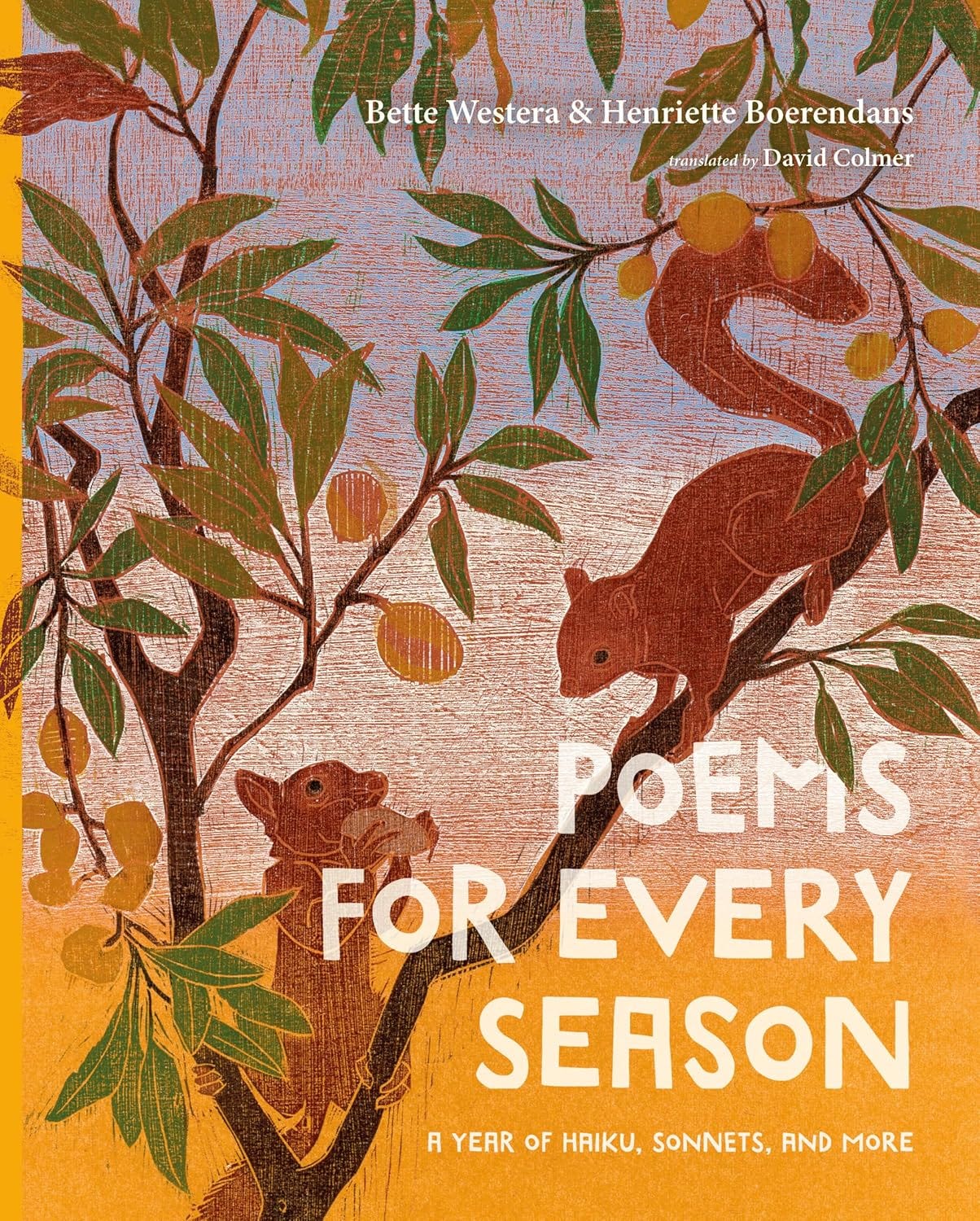
POEMS FOR EVERY SEASON: A YEAR OF HAIKU, SONNETS, AND MORE, written by Bette Westera, illustrated by Henriette Boerendans, and translated by David Colmer, is a stunning volume that features 16 poems in different forms, like haiku, rondel, aromatic, double dactyl, pantoum, tanka, etc. (Forms are explained at the end.) The poems range from spring through the following winter, March through February, and describe subjects like hibernation, spring fever, a woodpecker rappety-tapping, bees buzzing—the book is a wonderful celebration of nature and language. The translator explains how the poems have been adapted, sometimes changed, for English, and they are all a treat. And the woodcuts! Each is worthy of framing!
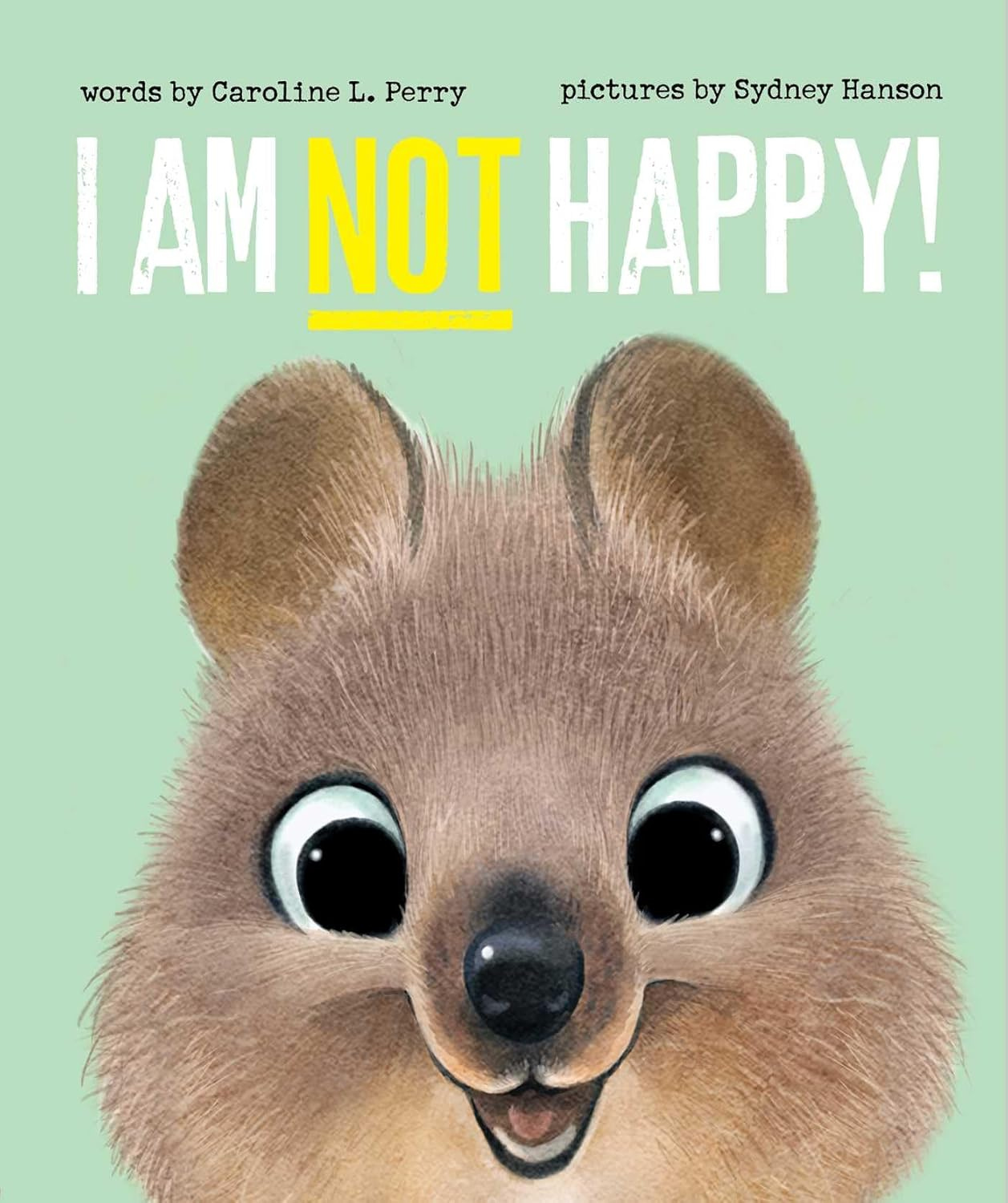
In I AM NOT HAPPY!, written by Caroline L. Perry and illustrated by Sidney Hanson, “today is NOT a g’day” because, as our smily-faced, puffy-cheeked, bright-eyed quokka narrator asserts, “looks can be deceiving.” This quokka is definitely “NOT HAPPY!” As they run through their sad, worried, angry, and embarrassed looks, each is defined by a “twinkling smile.” There are many more instances of this quokka being misunderstood, until a newspaper article provides the vindication they are looking for—and a reason to finally be happy. Text consists of the cheerful-looking quokka talking/ranting/emoting to readers, with a fun twist at the end that’s not diminished by the possibility that readers might see it coming. The digital illustrations show animals that are all completely adorable, no matter what moods they are in.
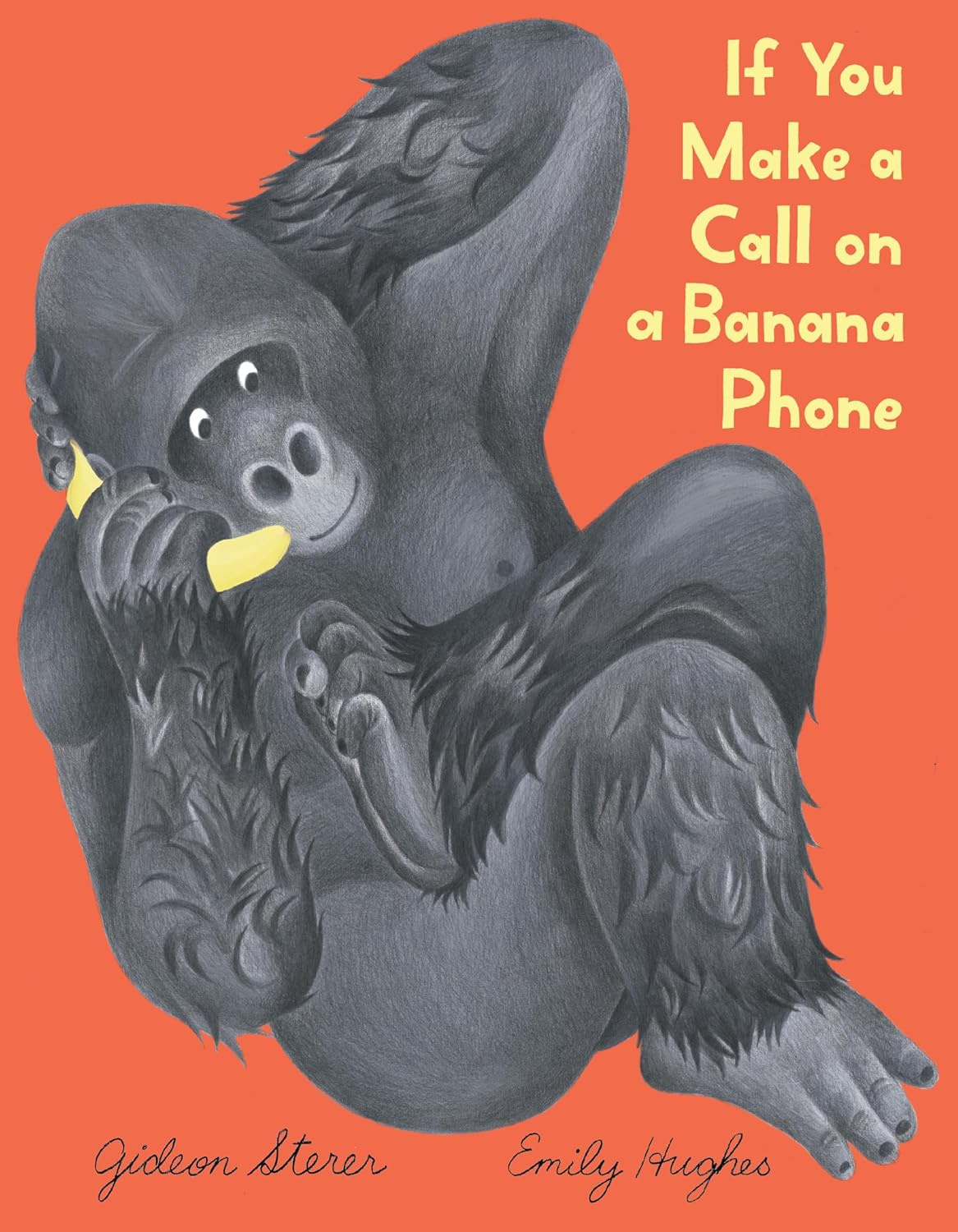
IF YOU MAKE A CALL ON A BANANA PHONE, written by Gideon Sterer and illustrated by Emily Hughes, uses a delightfully kid-friendly premise: what if, instead of eating your banana, you used it to make a phone call? Because if you do, “a gorilla will probably answer.” And they will have questions. Which you can answer, but then it’s also interesting to “share some things, like your favorite color or sandwich or joke.” And if they “want to know if you have stripes or spots, horns or a tail,” well, imagine if you did! This is a marvelous blend of fantasy and reality, showcasing the power of imagination and “what if…?” The musing text unspools nicely and the pencil and Photoshop illustrations, featuring warm, earthy colors, feels solidly “real,” while at the same time conveying plenty of whimsy.
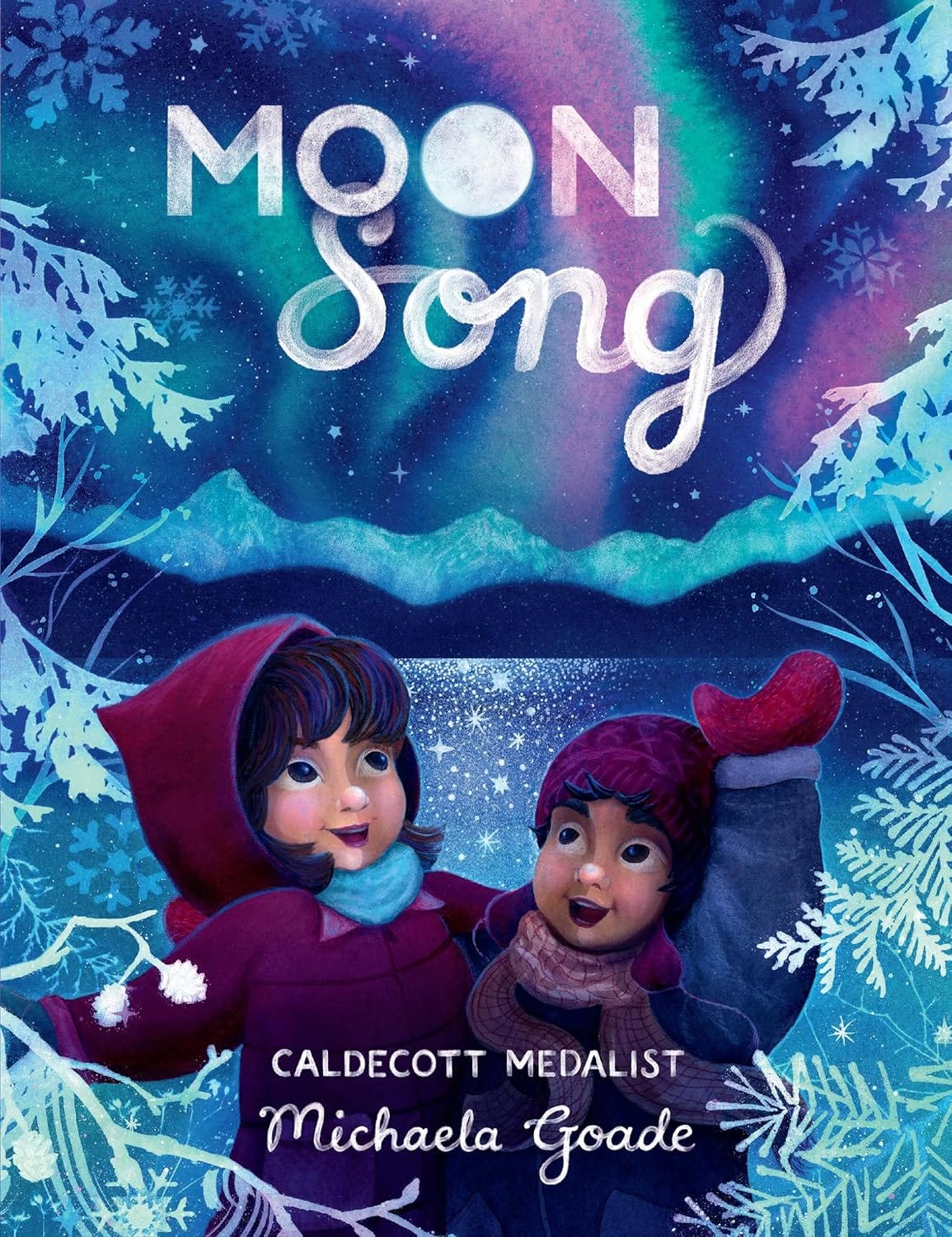
In MOON SONG, by Michaela Goade, a girl and her family scout for deer, fish for king salmon, and dig for clams “on an island at the edge of a shimmering sea.” At day’s end, they “gather by the hearth in the warm glow of home.” When her cousin is worried by the dark, the girl invites him to imagine “a night, just like this one,” where “Moon sings a bright song,” and the pair follow the light. “In the dark… the forest sings,” and “the ocean sings,” but always “a light beckons” until, in a glorious fold-out spread, “the world bursts into song.” Then both cousins welcome the dark, as they “drift and dream of moon song.” Back matter explains the author’s personal connection, and why winter is a time “to honor both the light and the dark.” The poetic text evokes a cold, magical night that shimmers to life with the Caldecott Medalist’s radiant watercolor and mixed media art.
—Lynn
Great post, Lynn. We’ve actually read most of these already. I loved If You Make a Call on a Banana Phone! I want to get Poems for Every Season. Putting it on my hold shelf now.
Thanks for this list! All on my new library oder…