January Recommendations


In UNBREAKABLE: A JAPANESE AMERICAN FAMILY IN AN AMERICAN INCARCERATION CAMP, written by Minoru Tonai and Jolene Gutiérrez and illustrated by Chris Sasaki, Minoru Tonai’s father is questioned in October 1941 about being a Japanese spy. After Pearl Harbor is bombed in December, the FBI takes Min’s father away. Min’s mother tries to run the family business, but customers aren’t buying. Before long, Min and his family are forced to pack up and move to an Assembly Center, where they’re herded into a horse stall to live, fenced in by barbed wire. A few months later, they’re transferred to Granada Relocation Center in Colorado (known as Amache), where they live without a bathroom or running water for two years. Min’s father is finally allowed to join them, then it’s another year after that before they can return home. Succinct, heartfelt text speaks firmly to the many injustices suffered by Min, his family, and all the Japanese Americans who were put into vile camps, and the illustrations, many of which feature characters seeming to look directly at readers, are deeply evocative without being overly sentimental. UNBREAKABLE is powerful, timely, and gracefully done.
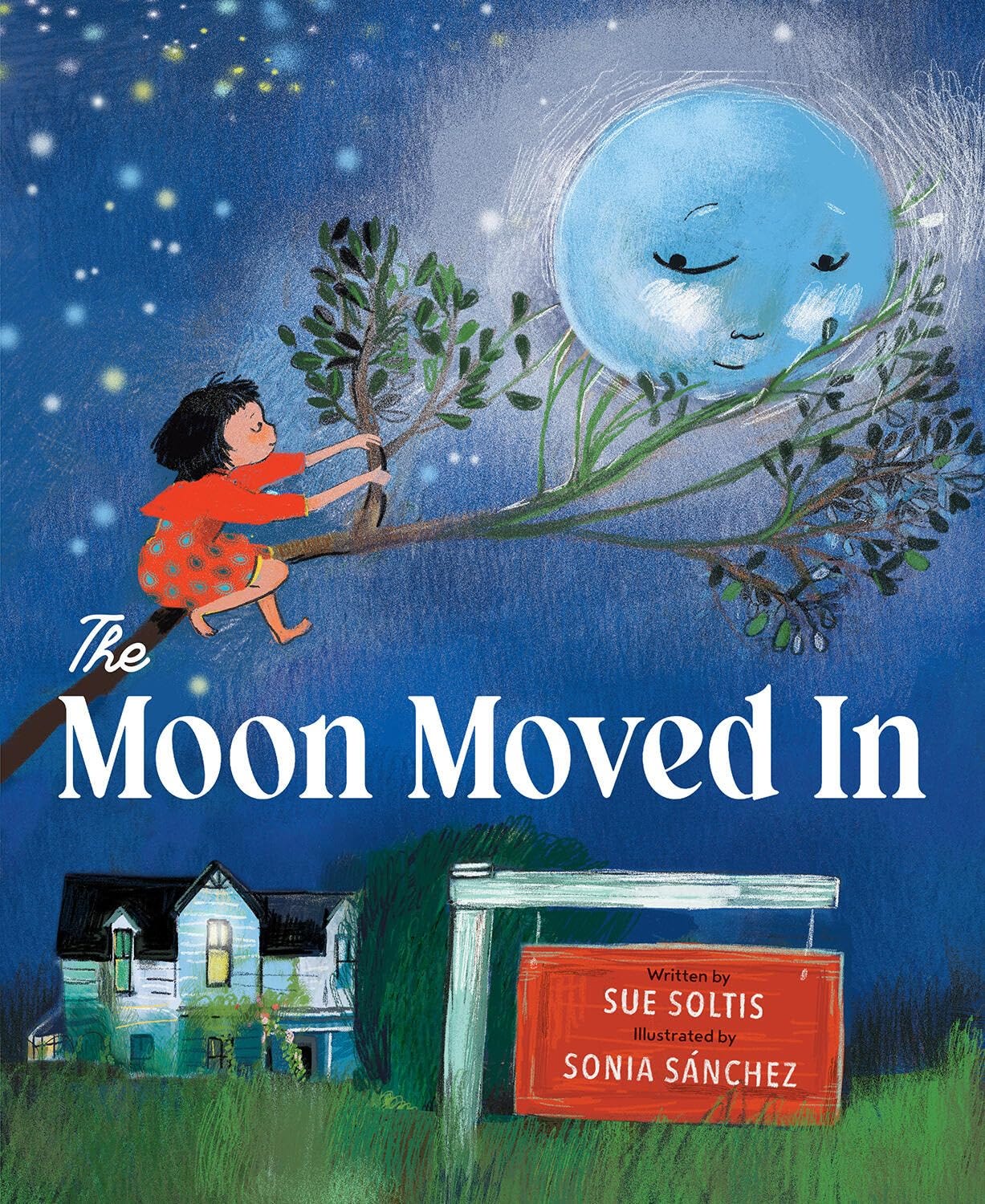
THE MOON MOVED IN, written by Sue Soltis and illustrated by Sonia Sánchez, is the whimsical story of how Stella found, gave up, then found a friend—or possibly two. One night, after the house next to Stella’s has been empty so long that she almost gives up “wishing for a kid her age,” the FOR SALE sign tips over, and… the Moon moves in! The Moon begins gardening and Stella helps by explaining about worms and bugs. But the rest of the world is frantically searching for the missing Moon. Tides “[refuse] to go in and out,” and the Earth “[takes] on a new wobble.” Stella wants to keep her new friend, but baby sea turtles are getting lost and moonlight cruises are a thing of the past. After the Moon is spotted “looking in the window of a garden store downtown,” Stella reluctantly talks about stranded sea snails and floundering dung beetles. Finally the moon decides to climb back into the sky and, one morning, a family moves in next door! But there are signs that the Moon comes by to visit. The tactile, amusing, beautifully-rendered computer illustrations elevate the well-developed, fanciful story, resulting in a delightful read.

TO ACTIVATE SPACE PORTAL LIFT HERE, transmission brought to you by Antoinette Portis of Planet Earth, is an interactive prank of a book. The story takes the form of two alarmed narrators, Blrg and Zrk, who talk to each other, and then directly to readers, through a small but growing window set in a black background. Blrg and Zrk become increasingly agitated as this “space portal” reveals “something out there!” Something that is staring at them! Something ALIEN!!!! The pair get ready to run, then do some posturing, then begin to get playful. In the face of this alien—who has small teeth—Blrg and Zrk are brave and fearless! By the time the portal begins powering down, friends have been made and an important message is shared: SKF FLRBL GRNK! Bold art and a really fun premise make this one a hoot!
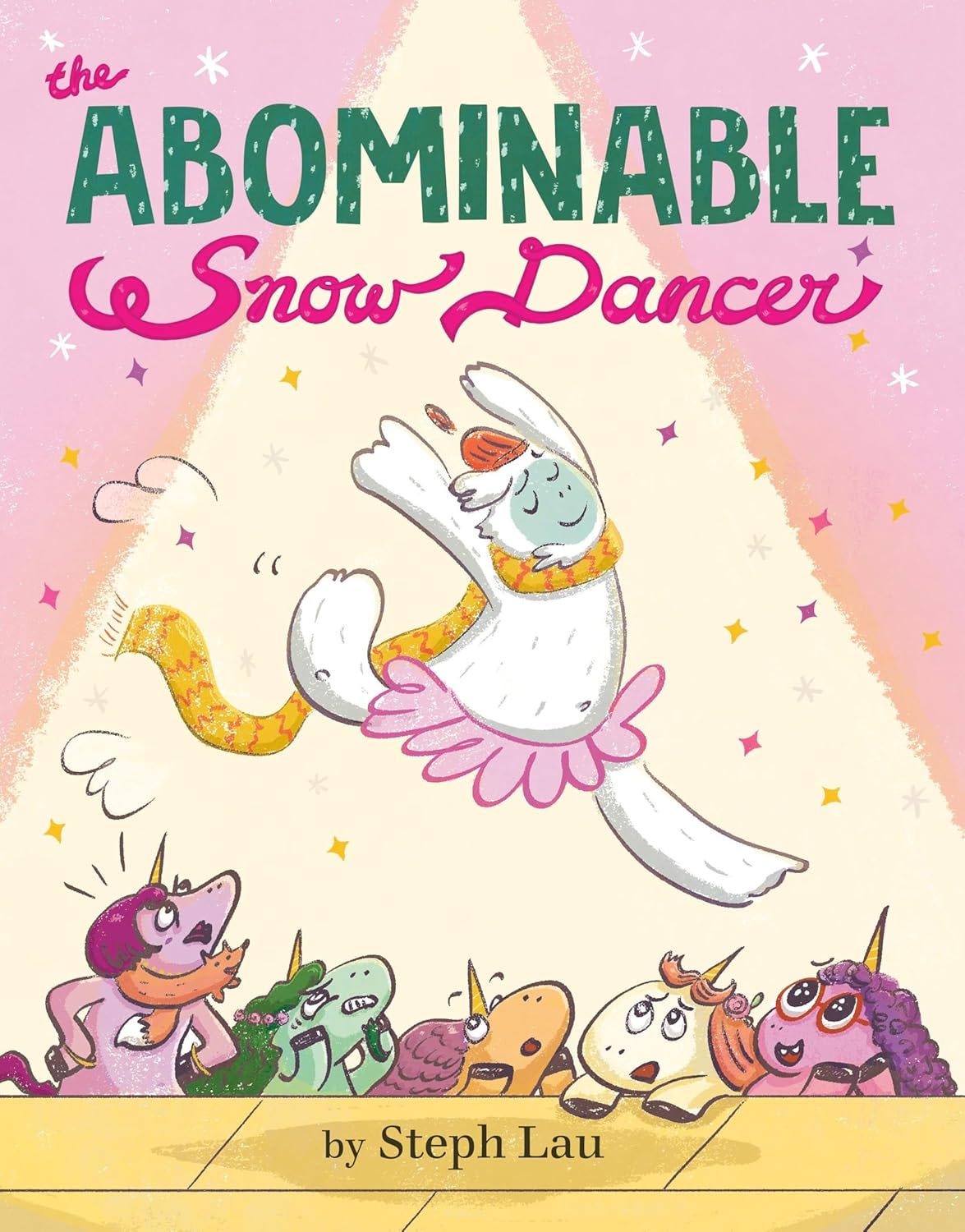
THE ABOMINABLE SNOW DANCER, by Steph Lau, has such an exuberant cover, it’s impossible to not feel delighted by it. Otto might seem like “the perfect abominable snowman” on the outside, but inside he secretly longs to… DANCE! He’s no good at it and the other yetis laugh. One morning Otto stumbles upon a group of sparkly unicorns holding auditions for a show. Unfortunately, they, too, find his dancing abominable. Otto is about to give up when Aiee! Eek! one of the unicorns falls from the flyspace and Otto springs into action, shimmying, whirling, and “gently, gracefully” twirling down to save the imperiled unicorn. The other yetis are “awfully, terribly, horribly” impressed and want to join the show. Funny, full of action, and with cute cartoony digital illustrations, this one encourages kids and yetis to follow their dreams.
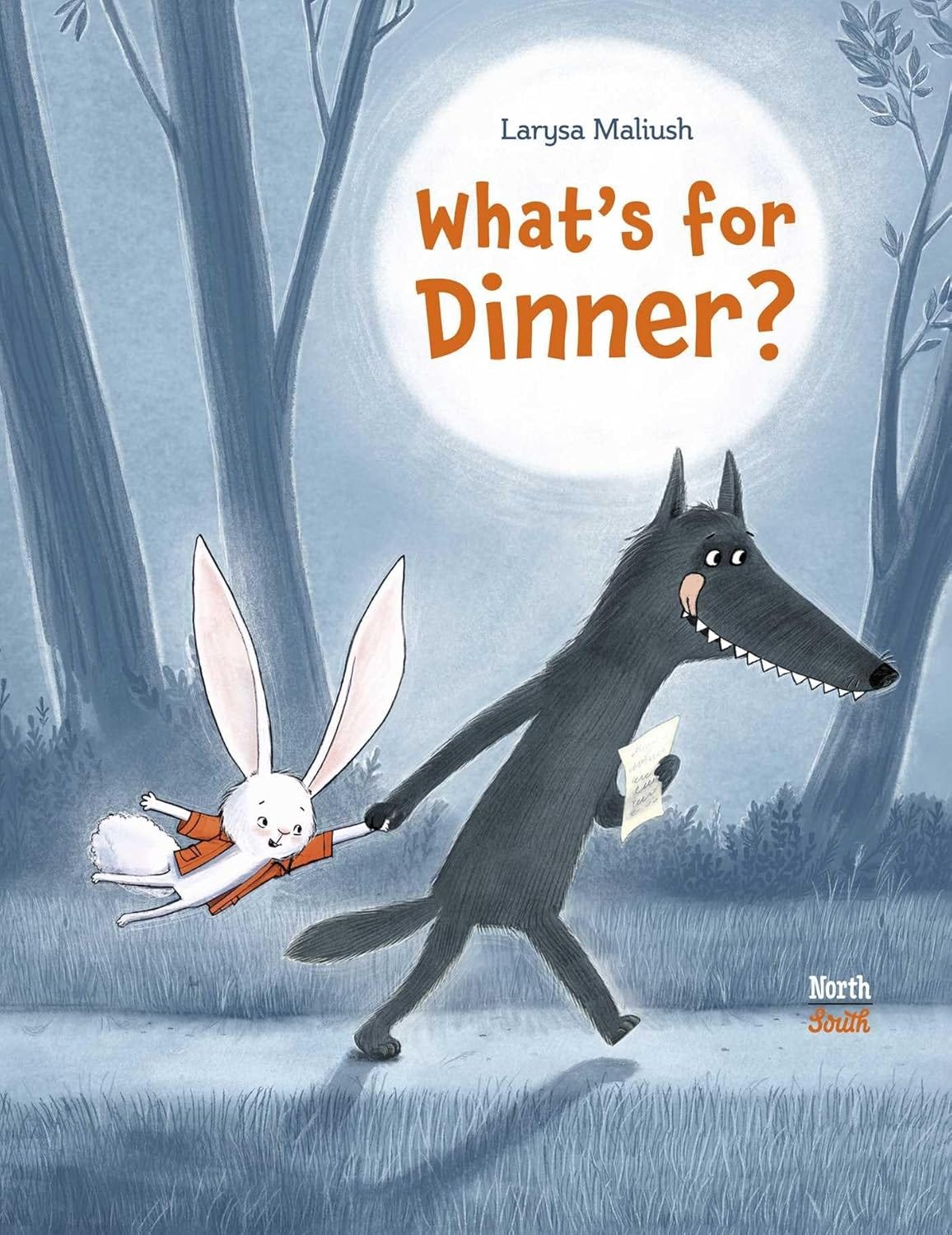
In WHAT’S FOR DINNER, by Larysa Maliush, Big Gray Wolf is singing to the moon AAA-WOOOOOOO when he finds a tiny, lost bunny and a note asking whoever finds this little Bunkins to please escort him home, in return for a “super delicious meal.” Big Gray Wolf decides the odds of a decent dinner are better if he brings Bunkins home rather than eating the “bite-size” thing on the spot. He fends off the other wolves, then travels a long way to find “a whole family of rabbits. Lucky him!” But after Big Gray Wolf is hugged, he’s served “so much food,” including four pieces of carrot pie, he realizes he’s too full to eat any rabbits. Was it a lucky decision or the right thing to do? And what will happen the next time little Bunkins goes missing? It’s a humorous story with a just-right, slightly menacing, feel to it, rendered with expressive illustrations in blue-gray hues and the splash of red that is Bunkins’s jacket. WHAT’S FOR DINNER poses an ethical dilemma that’s perfect for the picture book crowd.
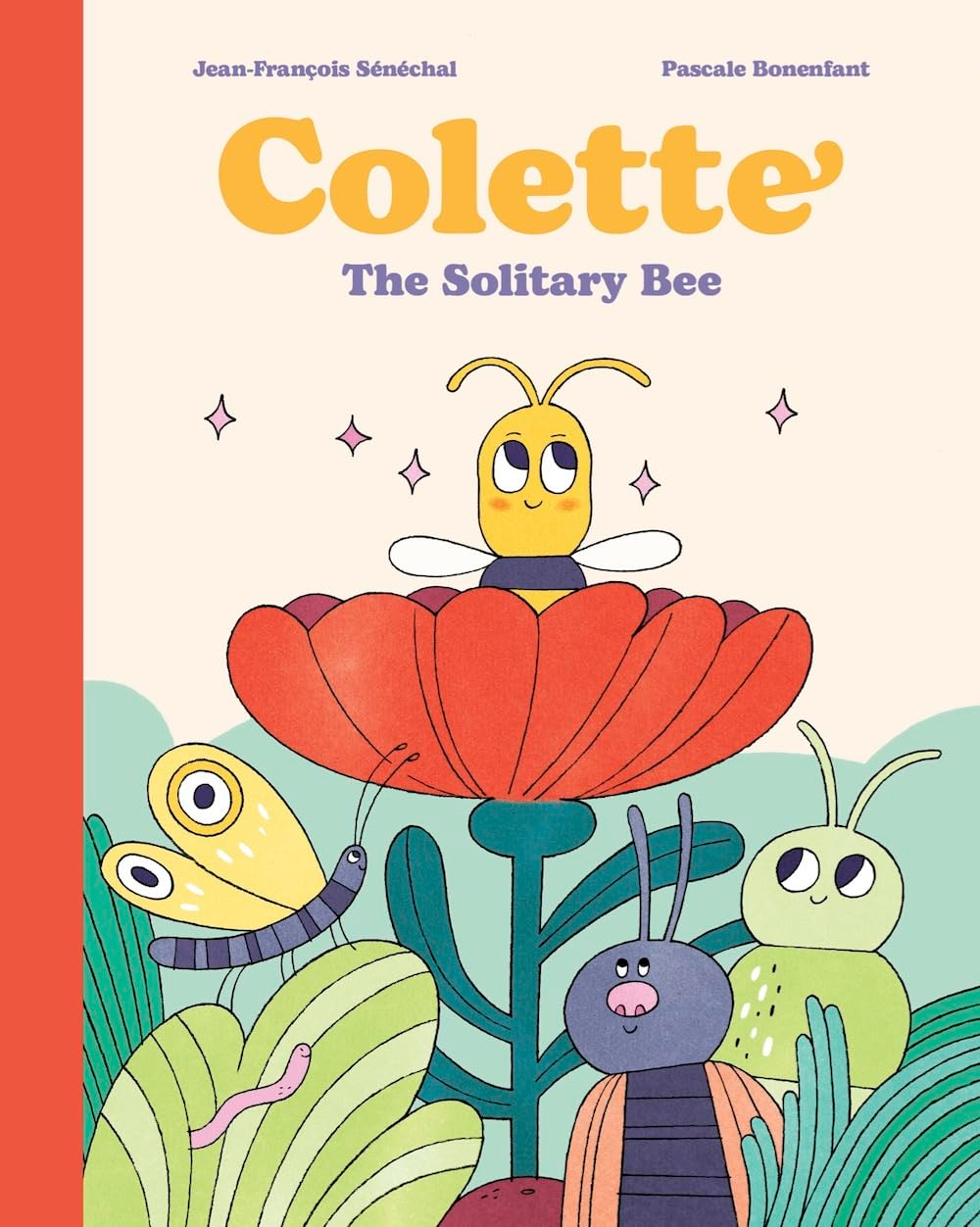
In COLETTE, THE SOLITARY BEE, written by Jean-François Sénéchal, illustrated by Pascale Bonenfant, and translated by Nick Frost and Catherine Ostiguy, Colette can do so many things by herself, and she’s so clever, “she doesn’t really need anybody else.” She certainly doesn’t need anybody’s help to go on adventures. But, sometimes, she asks for directions or needs a little light at night or protection from a storm. And, sometimes, she helps others when they ask. Colette is very popular, “which is not always easy for a solitary bee.” When Colette is asked about her adventures, she tells of daring solitary journeys. But as she reflects on “the most important thing she’s learned,” memories of “smiling faces” and “many shared moments” come back to her and Colette decides to tell her story all over again, the right way, which includes the “important bits” with friends. It’s a winsome look at the pleasures of solitude and the joys of companionship—as needed—rendered in cartoony panels with a Peter Max-ish vibe. Lighthearted, but empowering.
—Lynn
Thank you so much for reviewing Unbreakable along with these other beautiful books!